
How to Plan a Trip to Ireland: A Step-By-Step Guide
Last updated on September 1st, 2026 at 05:48 pm
After 11 trips to Ireland, including my first-ever solo trip, I’ve learned that planning an Ireland trip isn’t about trying to see everything. It’s about choosing the right places for the amount of time you have, figuring out whether you need a car, and building a route that doesn’t leave you exhausted.
Each trip is different. Some are road trips to lesser-visited corners of Ireland, like Donegal; some are city weekends in Galway or Dublin, and many are a combination of the two.
Ireland travel planning can be overwhelming in that sense; there are so many beautiful places to visit. How do you plan a trip to Ireland that lets you see them all without feeling rushed?
I have figured out a system for planning well-rounded trips to Ireland that you can use for planning your own. Whether it’s your first trip to Ireland or your 12th, like me, you will find useful tips to plan your dream Ireland itinerary.
This post contains affiliate links, which means that, at no additional cost to you, I will earn a tiny bit of income if you decide to make a purchase or booking. Please read my disclaimer for more information.\
Decide How Many Days You Have
Ireland is a small country, but there is a lot to see.
I recommend at least one full week in Ireland.
My first trip to Ireland was one week long and since then I’ve visited for varying lengths from three days up to 2.5 weeks. I think that a week in Ireland is the sweet spot for a first trip.
If you can, get nine days off of work. With days 1 and 9 as your travel days, this gives you 7 full days in Ireland!
Choose Where to Go Based on Those Days
Once you know how many days you’ll have in Ireland, the fun begins. You can now decide where to go!
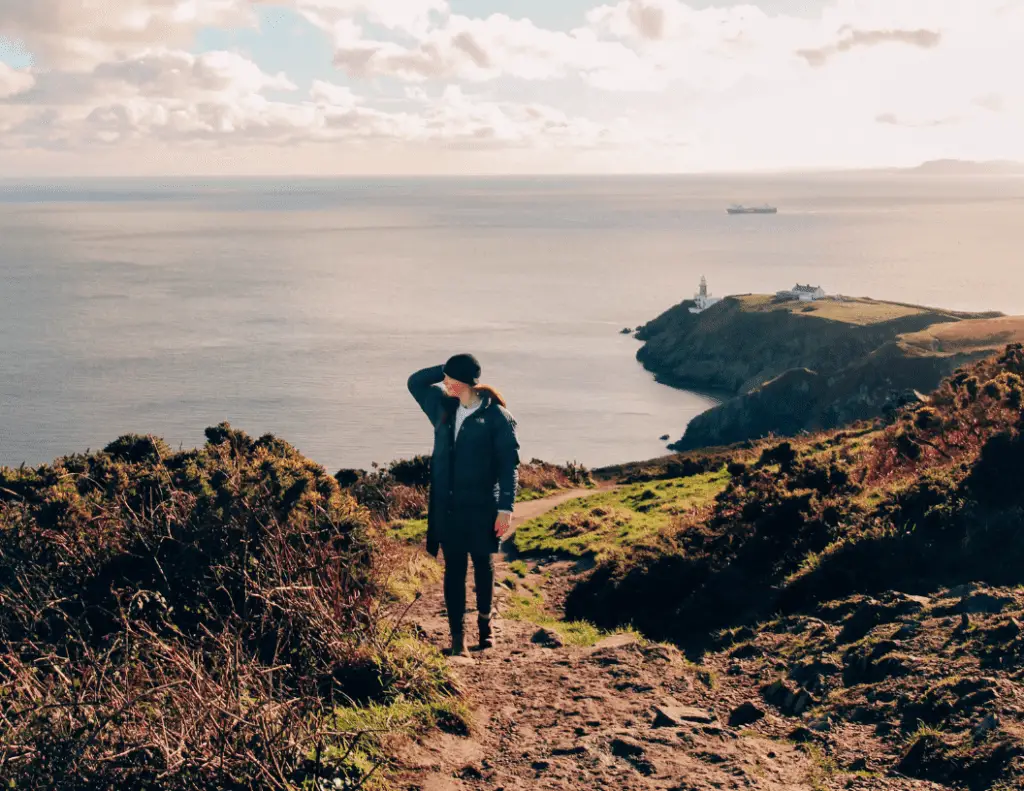
Here are a few of my favorite places to visit in Ireland to consider adding to your itinerary. I’ve listed my favorite places to visit in groups of cities and towns that are near each other. For example: Galway, Clifden, and Doolin are near enough to combine into one itinerary.
Dublin (2 nights): If it’s your first trip to Ireland, I recommend spending two days in Dublin. In Ireland’s largest city, you can visit the Guinness Storehouse, Kilmainham Gaol, and see the Book of Kells at Trinity College. If you’ve been to Dublin before, I’d recommend skipping it and heading to a new destination.
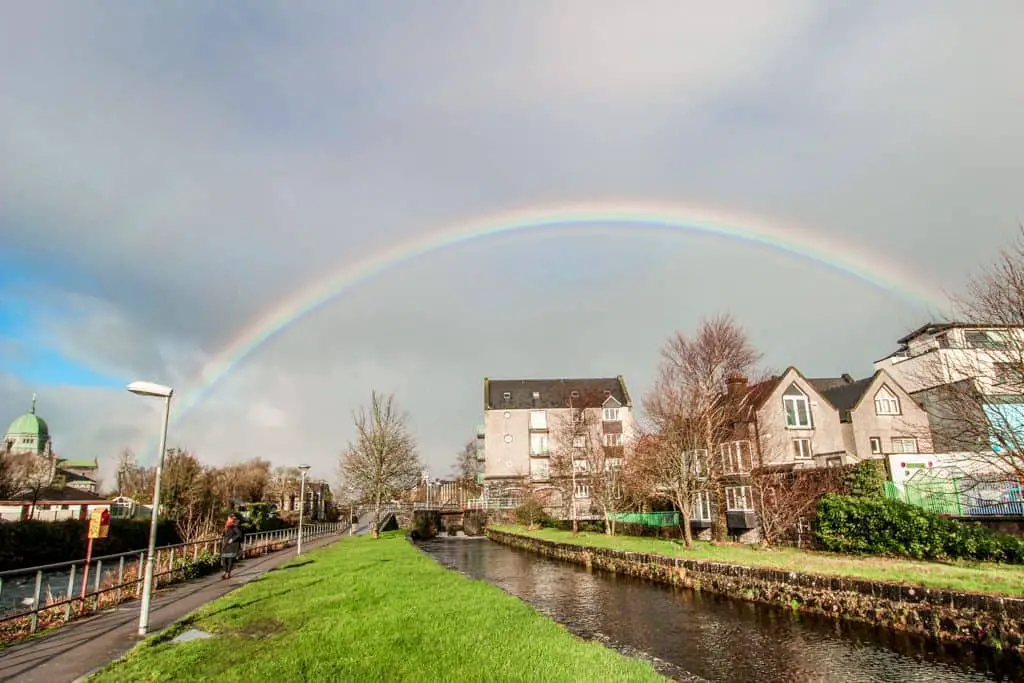
Galway (2-3 nights): Galway is my absolute favorite place. It feels like my home away from home. I try to go there every trip. The pubs in Galway are amazing and its location near some of the most beautiful landscapes makes it a great base for exploring more of Ireland’s beautiful west coast.
Clifden (1-2 nights): I adore Clifden. It’s a small fishing village at the heart of Connemara National Park. If you want an outdoorsy trip, Clifden is a great base for hiking Diamond Hill, cycling the Sky Road, visiting Kylemore Abbey, or taking a day trip out to Inishbofin Island.
Sligo (1-2 nights): Sligo is a great base on the Wild Atlantic Way. It has urban vibes while being really close to beautiful hikes like Benbulben and Queen Maeve’s Trail. Or you could head into Strandhill to take a traditional seaweed bath with views of the Atlantic Ocean!
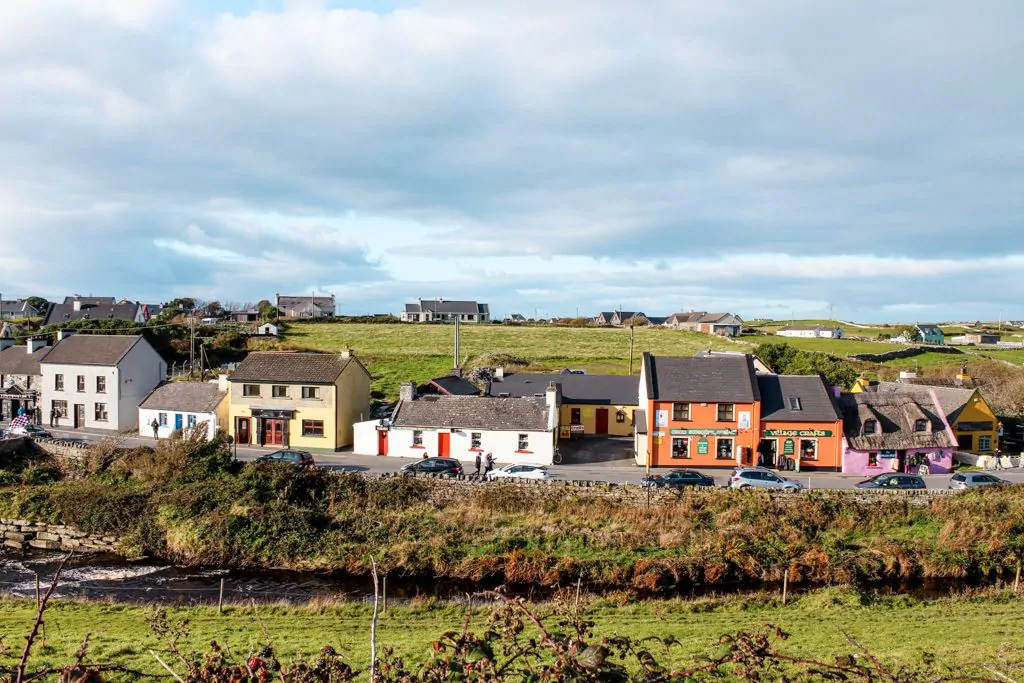
Doolin (1-2 nights): Doolin is a colorful town in County Clare close to the majestic Cliffs of Moher. It’s also known for its traditional Irish music. After a day spent outdoors cozy up in Doolin’s pubs for a good meal and live music!
Killarney (2 nights): I’ve spent a couple of days in Killarney National Park. The park is absolutely stunning and it’s very accessible with a car or on foot. It’s also the start of the famous Ring of Kerry road trip, which I’ll be driving on my next trip!
Dingle Peninsula (2-3 nights): The Dingle Peninsula is a highlight of Ireland. I’ve been once and am looking forward to going back this fall to drive the scenic Slea Head drive, take a day trip to the Blasket Islands, and enjoy delicious food in Dingle town.
Cork (1-2 nights): If you’ve been to Dublin before, I’d recommend visiting Cork over Dublin. It has a much more local vibe, a great foodie scene, and is home to the English Market and the Blarney Stone.
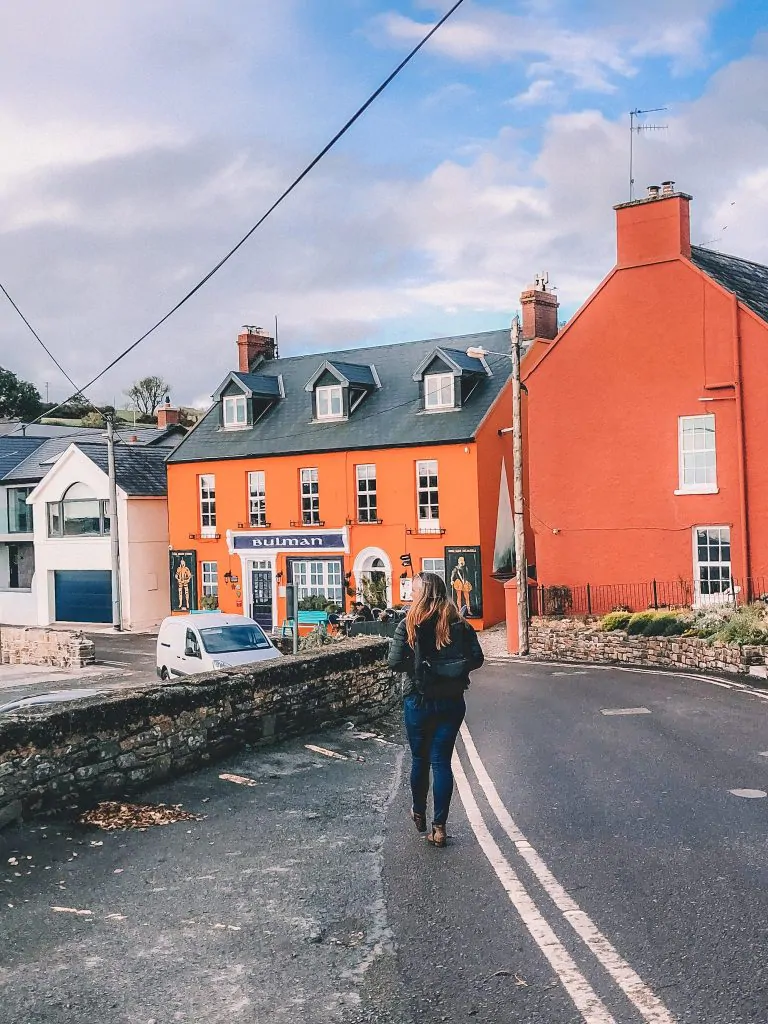
Kinsale (1 night): Kinsale is a super cute and colorful fishing village about 30 minutes from Cork. The seafood in Kinsale is amazing and there’s a lovely coastal walk to an ancient fort you can do. The walk passes by the Bulman Pub which is a great spot to rest!
Kilkenny (1 night): I was pleasantly surprised by Kilkenny. I truly didn’t know what to expect. Kilkenny is a medieval city with an ancient castle you can tour and distilleries to visit. If you’ve been to Ireland before, I recommend checking it out. But if it’s your first time, you can skip it for other destinations listed here.
Donegal (2-3 nights): Donegal is breathtaking and worth the journey it requires to get there. If you have a car and want a truly unique trip to Ireland, go to Donegal. You can visit Slieve League Cliffs, which are higher than the Cliffs of Moher, hike Mt Errigal, or relax in a seaside town like Dunfanaghy.
Belfast (2 nights): I’ve only visited Belfast once and it was for a short time, so I decided to make the most of it by taking a Game of Thrones themed guided tour of the Giant’s Causeway. You could easily combine this with a visit to Donegal!
Don’t try to fit all of these places into one trip. Pick one region that excites you and build your itinerary around it. For a first trip without a car, I’d choose Dublin + Galway + Doolin because you get a mix of city, small-town Ireland, dramatic scenery, and easy day trips without spending your vacation constantly changing hotels.
First Time in Ireland One Week Itinerary Without a Car
Day 1: Explore Dublin City
- Visit distilleries, museums, shop on Grafton Street, enjoy Dublin’s pubs
Day 2: Day trip to Howth, then bus to Galway
- Walk the Howth Cliff Walk, overnight in Galway
Day 3: Spend the day in Galway
- Walk Salthill Prom, shop on Shop Street, enjoy live music in Galway’s pubs
Day 4: Day trip to Connemara from Galway
- Hike Diamond Hill or visit Kylemore Abbey. Stop in Clifden for lunch.
Day 5: Cliffs of Moher; overnight in Doolin
- Take the bus to Doolin. Walk the cliff walk from Doolin to the Cliffs of Moher. Enjoy live music in Doolin’s pubs
Day 6: Day trip to the Aran Islands from Doolin, back to Galway
- Take the ferry over to the Aran Islands; choose either Inisheer or Inishmore! Return to Galway for one night
Day 7: Enjoy the day in Galway, then head back to Dublin
- Enjoy a final day in Galway before taking the bus back to Dublin to fly home the following day.

Alternative One Week Ireland Itineraries
- Northern Ireland: Belfast, Derry, and Donegal
- Great if you want less crowded places and seriously beautiful landscapes
- The Wild Atlantic Way: Doolin, Galway, Clifden, and Sligo
- Great if you can fly into Shannon and want a mix of cities and outdoors
- Southern Ireland: Cork, Kinsale, Cobh, Killarney, and the Ring of Kerry
- Great if you want to rent a car for a bucket list road trip
Good City Bases and Day Trip Combinations
- Dublin: Use it as a base for day trips to Howth, Bray, and Wicklow.
- Galway: Use it as a base for the Aran Islands, Connemara, and the Cliffs of Moher.
- Cork: Use it as a base for Cobh and Kinsale.
Here are a Few Alternative Itineraries
3 Days in Ireland: Pick one city as a base and do day trips from there to minimize time wasted on transit and moving hotels.
5 Days in Ireland: Pick two bases and explore the surrounding area rather than trying to cross the entire country.
10 Days in Ireland: Add a small town like Dingle, or head north to County Mayo or Donegal.
Decide If You Need a Rental Car
Once you have an idea of where you want to go on your trip to Ireland, you need to figure out how you’ll get around.
Renting a car is the most popular way to travel around Ireland, but you can also get around to most of the “must see” places in Ireland with public transport.
I’ve done it both ways. I didn’t rent a car until my 9th trip, relying solely on Ireland’s bus and train network to achieve my itinerary. Doing so I was able to go to Sligo, Ennis, Doolin and so much more using public transportation.
I’ve recently overcome my fear of driving in Ireland, completing two road trips, and I’m planning my third. Renting a car certainly creates more freedom in your itinerary. Without relying on a bus or train schedule, you can stay in unique places, plan hikes when it fits in your day, and linger longer in places you enjoy.
However, renting a car is more expensive, it’s tiring to drive solo, and it’s stressful on those narrow roads!
If your itinerary is mainly city focused, I don’t recommend renting a car. Choose a base and take day trips or simply move between main towns with buses and trains.
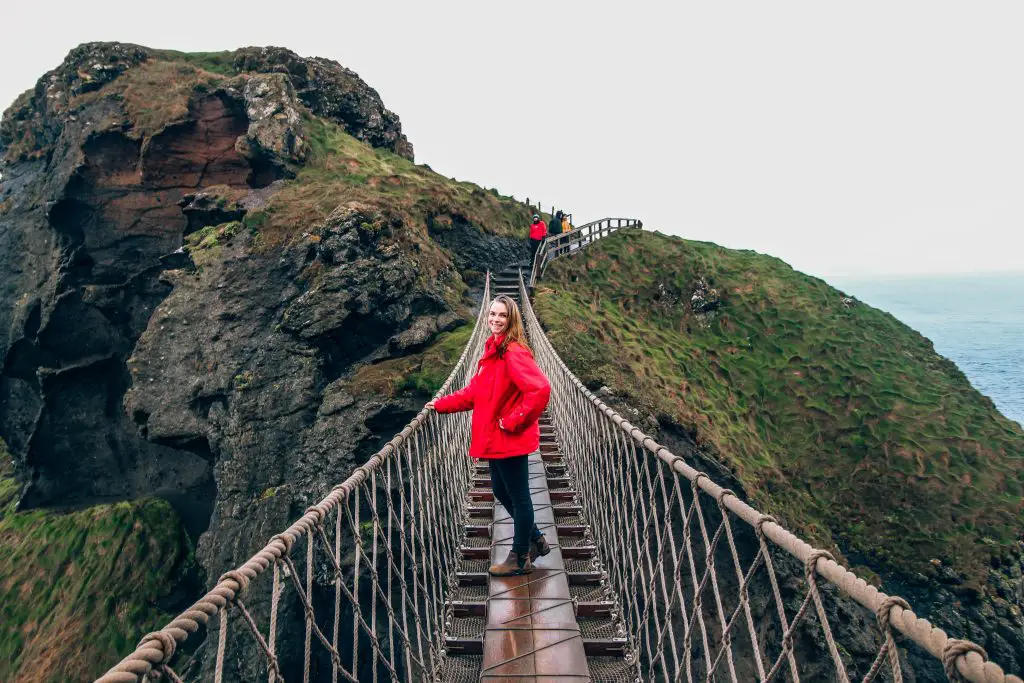
If you want to go to places like Donegal, Achill Island, or drive the Ring of Kerry, I’d recommend renting a car.
Choose the Best Time to Visit
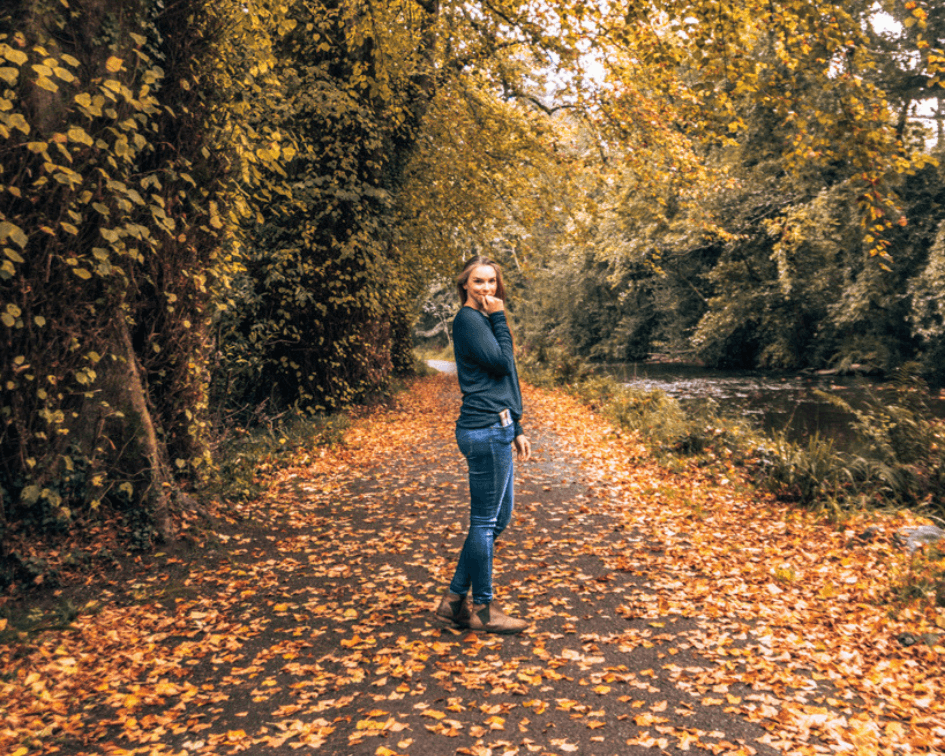
May, September, and October are my favorite months to visit Ireland. These shoulder-season months are great because the weather is decent for outdoorsy activities, the days are still long enough to be able to do and see a lot, and since most tourists either haven’t arrived yet or have gone home, hotel and B&B prices are more budget-friendly.
The most popular time of the year to visit Ireland is in the summer months of June to August. If this is the only time of the year you can manage to go, you can still enjoy it despite the crowds. But you may want to adjust your itinerary to visit less touristy places like Donegal and the Slieve League Cliffs instead of Doolin and the Cliffs of Moher.
Also, don’t overlook Ireland in the winter. I visited Dublin in December, and it’s such a fun time of year to be there with the pubs and streets beautifully decorated for the holidays. It will certainly be cold, and as you get outside of Dublin, some sites may not be open. But it will be incredibly peaceful! If you are truly craving a solo retreat, the winter months are a good time of year to go.

Set Your Ireland Travel Budget
Your Ireland travel budget is primarily influenced by the time of year that you visit, whether or not you decide to rent a car, and what type of accommodation you prefer.
I’m not great at tracking what I spend on my Ireland trips, but I was curious.
I recently ran the numbers from my last two trips and realized that a week-long trip using mid-range accommodation for one person is $2,700-$3,500. This is excluding flights. The higher end of this range includes a rental car.
Here’s what I recommend budgeting for your solo trip depending on your travel style, excluding flights:
- Budget traveler: $1,500-$2,000
- Primarily staying in hostel dorm rooms and using public transportation.
- Mid-range traveler: $2,700-$3,500
- Staying in mid-range accommodation, perhaps a splurge night here or there, possible rental car.
- Luxury traveler: $5,000+
- Think castle hotels, private tours, and a rental car.
Obviously, if you’re traveling with someone else you can split the cost of a hotel room and rental car.
Also, double-check the exchange rate so you have a good idea of what you’ll actually end up paying. You can use an app like XE Currency Exchange, or if you have an iPhone, the calculator now has a currency converter.
Build Your Itinerary
Let’s do a quick check-in. I know travel planning can get overwhelming, but you’re basically there!
At this point, you should have:
- Decided how many days and when you’ll be in Ireland
- Researched the places you want to visit and have your bucket list
- Decided how you’ll get around and how much you’re willing to spend
That’s basically your itinerary done, and now you just need to fill it out a bit more.
Here’s how I’d do that:
- Map the cities and towns you want to visit to see the logistics of getting between them.
- Decide how many nights you want in each place.
- Research accommodation options.
- Pick two things to do or see in each place per day. One for the morning and one for the afternoon.
- Find some good-looking places to eat or get coffee.
I find this information by going to blogs for each specific city to figure out how long I need to be in each place.
At this stage, I also spend a ton of time on Google Maps. I zoom in on each town and the routes between them to find good restaurants, viewpoints, or hikes nearby.
I keep track of anything that looks interesting on a simple Google Doc. I used to use spreadsheets, but it’s easier for me on a Google Doc now.
Book Flights, Accommodations, and Tours
Now, it’s time to make some bookings!!
About six months out from your trip, start watching flight prices and book when you find a price you’re comfortable with. I recommend using Skyscanner or Google Flights to compare prices and then book directly with the airline.
I do not recommend booking flights through a third party. If anything happens to the flight, it’s much easier to deal with the airline when you’ve booked directly.
About two months out, book your accommodations. I compare options and read reviews on booking.com. Then I map my top picks on Google Maps to see how close they are to my ideal activities.
Book directly on the hotel’s website if you can. Sometimes they offer discounts for booking directly.
Many B&Bs are only on booking.com, so I usually just book it through that platform. I haven’t had any issues with it.
Hostelworld is an excellent resource for hostels throughout Ireland if that’s your vibe.
About one month out, book your rental car—or earlier if you’re traveling during peak season.
Two to three weeks out, fine-tune your itinerary by booking any tours and making dinner reservations if needed.

Pack for Your Trip
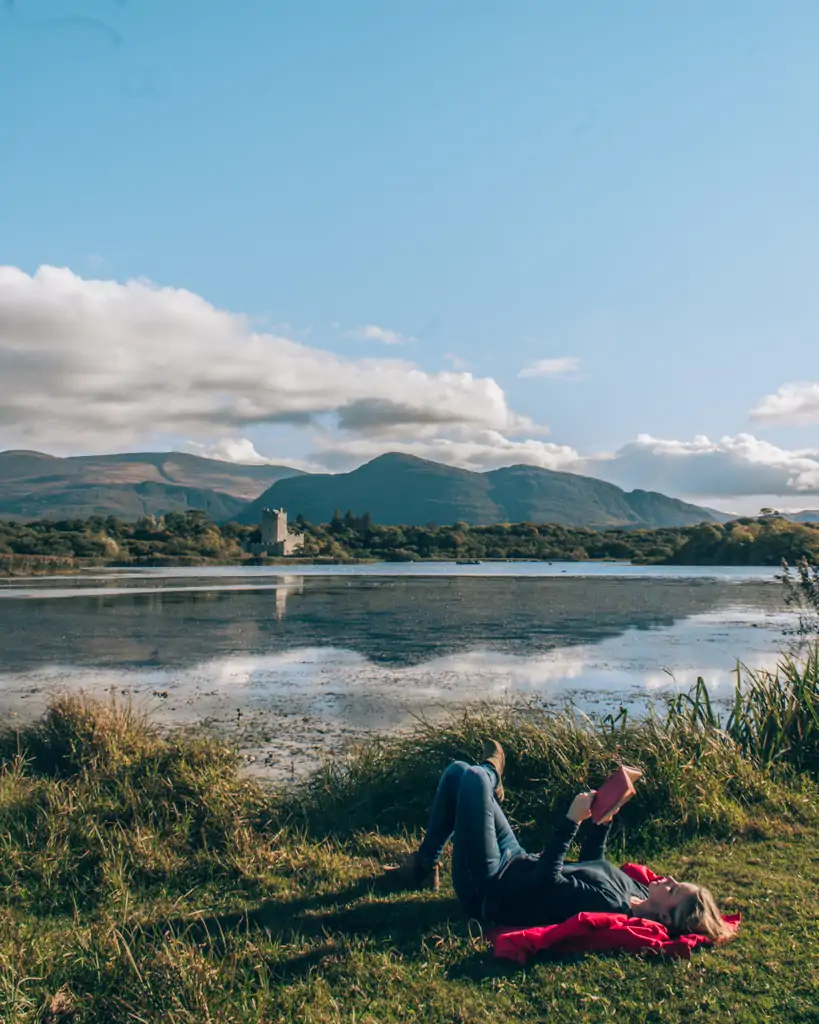
Around two to three weeks out, start thinking about how you’ll pack for Ireland. I’ve put together this Ireland packing list that details what to pack for each season. But here are my two biggest tips for packing for Ireland.
- Ireland jacket system: Deciding on a jacket for Ireland can be tricky. Let’s keep it simple. You need a fleece or sweater as a mid-layer, a waterproof rain jacket, and a packable puffy jacket. The style of these is up to you, but that’s all you need!
- Pack for your itinerary: One of my biggest Ireland travel tips is: don’t pack for anything you could possibly do in Ireland; pack for what is actually on your bucket list, and you’ll be set. If you’re hiking, make sure you have the right shoes, waterproof gear, and backpack. If you’re planning mostly city trips, then pack smart casual clothes. If a fancy occasion arises, you can go shopping there!
Planning a trip to Ireland can feel overwhelming when you start looking at everything you could possibly see. After 11 trips to Ireland, my biggest piece of advice is to stop trying to fit everything in.
Choose how many days you have, pick one or two regions that excite you, decide whether you actually need a rental car, and then build your itinerary around those choices. You’ll have a much better trip than if you spend your entire vacation rushing from one place to the next.
And remember, there isn’t one “right” way to visit Ireland. My favorite itineraries are the ones that leave enough room to slow down and enjoy where I am.
If you want to know exactly where I’d go, how I’d get there, and where I’d stay, check out my 7-day Ireland itinerary for a detailed plan.
Read More About Ireland Travel Planning
- How to Plan a Trip to Ireland: A Step-by-Step Guide
- Is Ireland Safe to Travel Alone as a Solo Female Traveler
- The Only Ireland Packing List You Need for Any Season
- What Not To Do In Ireland: Avoid These Tourist Mistakes in Ireland
- 20 of the Best Places to Visit in Ireland
- How to Spend 7 Days in Ireland without a Rental Car
- How to Spend Four Days in Ireland: The Ultimate Itinerary
- How to Get Around Ireland as a Solo Traveler
- How Much Does a Trip to Ireland Cost? A Realistic Budget
Find this helpful? Save it to Pinterest!


