Blog, Destinations, Europe, Ireland
What Not To Do In Ireland as a Tourist
Aug
Last updated on August 19th, 2026 at 09:09 am
Ireland may not be a country you’d expect to experience culture shock in. Over my 11 trips to Ireland, I’ve found that it absolutely lives up to its reputation of being welcoming, safe, and beautiful. But I’ve also found myself in a few sticky cultural situations that taught me it’s worth knowing a little about what not to do in Ireland before your trip.
I’ve definitely had a bit too much to drink in pubs, claimed I was Irish when I only have Irish ancestry, and assumed the Irish language was no longer widely used.
I recently took my Mom to Ireland and am planning a trip there with my best friend. I had to remind both of them of a few things to consider during their trips!
If you’re in the same boat as my Mom and bestie, planning your first trip to Ireland and hoping to avoid some culturally cringe-y moments, I’ll share what I told them about what not to do in Ireland. Some are cultural faux pas, while others are simple travel mistakes I wish I’d avoided on my first few trips.
This post contains affiliate links, which means that, at no additional cost to you, I will earn a tiny bit of income if you decide to make a purchase or booking. Please read my disclaimer for more information.
Cultural & Social Mistakes to Avoid in Ireland
Drinking in Ireland
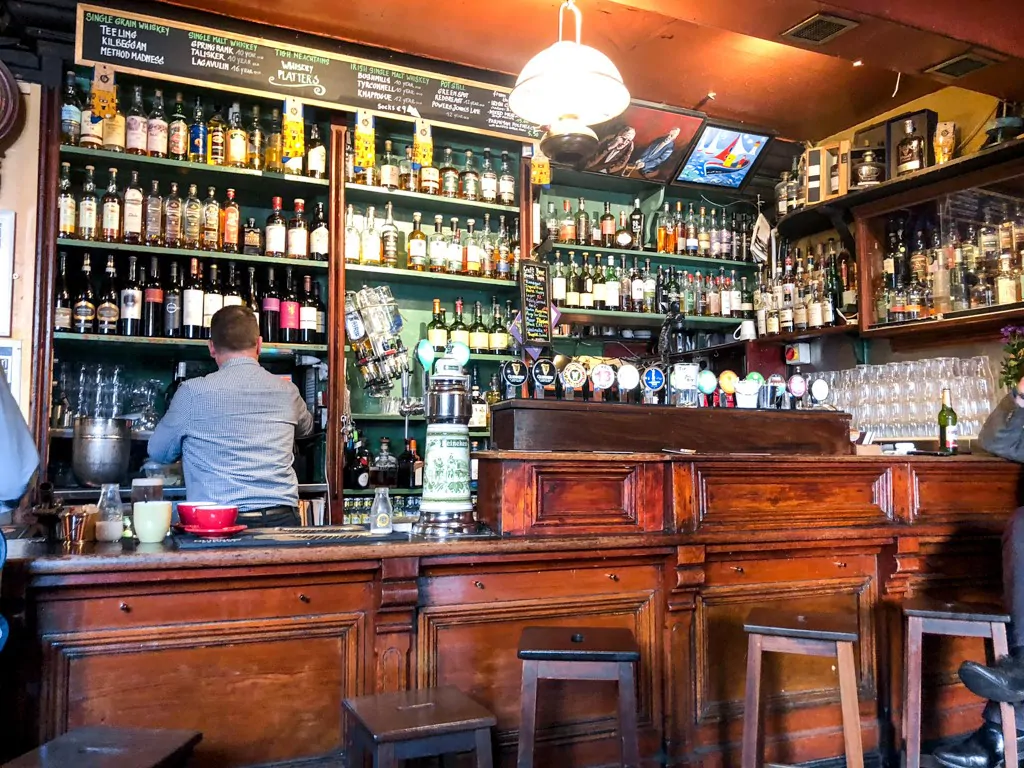
Stopping into a pub for a pint or two each day during your time in Ireland is a great way to immerse yourself in Irish pub culture (and Galway city has great pubs to do so). I love popping in to listen to a traditional music session with a pint at the end of the day.
However, there really is no need to get drunk every night of your trip. There is more to Ireland than Guinness, like gorgeous hikes and white sand beaches, which you’ll miss if you’re nursing a hangover every day!
Enjoy the pints, but remember there’s more to Ireland!
Ordering Drinks with Offensive Names
There are two drink names I’ve heard in bars in the United States: an Irish Car Bomb and a Black and Tan.
When referring to the drink, an Irish car bomb is when you drop a shot that’s a mix of Baileys and Jameson into a pint of Guinness and chug it before it fizzes over. Honestly, it’s disgusting, and so is the name.
Car bombs in Ireland were a major violent reality for many years. Ordering one in an Irish pub is super offensive. But I truly think this drink has more to do with US drinking culture. Most Irish people I’ve seen in bars are not pounding a Guinness.
A Black and Tan drink is Guinness poured over a tan-colored beer, like a Pale Ale, in the same glass. While the phrase describes the colors in the glass, it also references the British Army’s uniforms. If you want this drink, it’s called a half-and-half.
Assuming Everyone Drinks
While we are on the topic of drinking, just because pub culture is alive and well in Ireland, that certainly does not mean that every Irish person you encounter drinks. Avoid making assumptions or pressuring anyone to join you for a pint.
I’ve definitely had a cup of tea in the afternoon in a pub, and it’s quite a nice change from a heavy pint!
Forgetting to Buy the Next Round
If you’re out drinking with friends, it’s customary for each person to buy a round. It only makes sense as you’ll get a few “free” drinks as well.
One night out in Galway, I met two women who introduced me to the Baby Guinness, a shot of coffee liqueur topped with Baileys so it looks like a tiny Guinness. It is delicious. And I had quite a few of them because we kept switching off ordering rounds. It was a very fun night, but three people trying to be even on buying rounds led to a rough morning!
Taking Banter Personally
One of my favorite new sayings I recently learned is “takin’ the piss”. This basically means someone is poking fun at you in a lighthearted way. And no group of people is better at this than the Irish.
They have a great sense of humor and a knack for sarcasm. Don’t be afraid to dish it back to them, but keep it kind and friendly, and you’ll win them over.
Also, don’t assume that every Irish person wants to banter or have a long chat with you. They have their own things to get to!
Mocking Irish Sayings
No one says “top o’ the mornin’ to ya”. No one. Don’t be that guy. Just be a normal human being and say good morning. Faking an Irish accent and trying to use an antiquated saying is no way to impress or make friends with the Irish.
One phrase that I do love, although I’m not brave enough to say myself, is: What’s the craic? Or that was good craic?
Craic is pronounced like crack.
And it basically means, what’s going on or that was a good time. It’s used very frequently, so don’t be alarmed when someone asks you: what’s the craic?
Treating Irish as a Dead Language
While English is the common language in Ireland, Irish remains the official language. The Irish language was almost eradicated over the years of British occupation.
However, it is alive and well. The Irish language is seeing a resurgence, with younger Irish people incorporating it into their daily lives. You’ll notice that the majority of signs are in both languages.
I’ve even seen new cafes in Galway that are Irish-speaking first!
Appreciating its presence and asking how to pronounce words or what they mean shows respect for Ireland’s culture and heritage.
Making Insensitive Comments about the Troubles
It is a good idea to familiarize yourself with Irish history and the reasons for, and long-term effects of, the War for Independence and the Troubles in Northern Ireland. Northern Ireland remains part of the United Kingdom, and the Republic of Ireland is its own country.
I had a general idea about the Troubles before my first trip to Ireland, but I’ve since started to learn more about it and just how recent this history is.
I recommend reading or watching Say Nothing. It does a great job of telling the story of the Troubles and can provide a better understanding of current politics in Ireland.
For a lighter watch, the show Derry Girls is a great show and provides a good perspective on this time period.
I wouldn’t casually bring it up with someone whose views you don’t know, especially as a conversation starter.
Referring to Ireland as Part of the UK
As mentioned above, Ireland has a long, troubled history with England and fought for many years for its independence. The Republic of Ireland is not part of the UK, and it is not British. It’s its own independent country.
I know it can get confusing when you bring in Northern Ireland because it remains part of the UK. I still wouldn’t assume someone in Northern Ireland identifies as British or Irish.
I actually had an interesting conversation with a couple in Dunfanaghy, Donegal, who were from Northern Ireland. One of them identified as British and the other as Irish. It was interesting to hear their reasons why, and it is something I will never be able to understand.
While the couple I spoke to was very open, I do not recommend bringing this up in casual conversation with a stranger, as it can be a very sensitive topic.
I don’t like talking about the US’s current political climate, and I don’t want to make someone else talk about theirs!

Don’t Claim You’re Irish Because of Your Ancestry
I am 50% Irish; my Dad is 99% Irish. My freckles, fair skin, and auburn hair (before it went gray) are evidence of that. On my first few trips to Ireland, I claimed I was Irish, and the people I told were good-humored about it.
But I recently stopped, because I’m not Irish. I wasn’t born there; my ancestors left around the famine years, and I am unaware of any living relative who still is from there. I could not get an Irish passport, which is so very sad.
Please don’t tell people you’re Irish if it’s just Irish ancestry.
Since I do look Irish, I have people ask me if I have family there. In those situations, I’ll tell them of my ancestry but clarify that they left a long time ago. If they want to continue talking about it, I’m down because I’d love to, but if they don’t, then the conversation moves on naturally.
Assuming Tipping Works like the US
Coming from the tipping culture in the United States, this took a while to get used to, and I even cringe at suggesting you don’t tip.
When I first started traveling to Ireland, I barely tipped at all. But as bakeries and coffee shops use card payment terminals that request a tip after you pay, I’ve noticed the opportunity to tip more frequently.
Generally speaking, tips are not expected at bars or coffee shops. For a nice meal out, a 10-15% tip is sufficient, but again, not required.
Avoiding Locals
If someone strikes up a conversation with you in a pub, don’t feel like you have to immediately retreat to your phone or your travel group.
The Irish are amazing storytellers, jokesters, and good at making you feel welcome. I can’t tell you how many times I walked into an Irish pub solo and was welcomed into a conversation with a group of locals that made me feel as if I’d known them forever.
They’ll probably even try to convince you to move to Ireland… which, if you can figure out how as someone who doesn’t qualify for the visas, let me know!
Travel Planning Mistakes to Avoid in Ireland
Overscheduling Your Itinerary
My first time in Ireland, I booked a day tour or made sightseeing plans every day, which meant I missed out on the spontaneous moments with new friends. I was so focused on seeing all of the beautiful places in Ireland that I didn’t take the chance to just soak it all in.
I had amazing Airbnb hosts in Galway who I missed out on getting to know better, and I even left towns I loved for towns I didn’t mesh with that well just to stick to my schedule.
You won’t be able to see the whole country in one week! This trip is yours; leave space to adjust the itinerary and seek out experiences that will fill you up. Let the rest go; you will likely want to come back to Ireland anyway.
Staying only in Dublin
Yes, you should see Dublin. Ireland’s capital city is full of rich history and fun things to do. But honestly, one or two days in Dublin is enough.
I love Dublin and have even taken trips from San Francisco just to spend a weekend there. But if your goal is to experience more of Ireland beyond the capital, don’t spend your entire trip there.
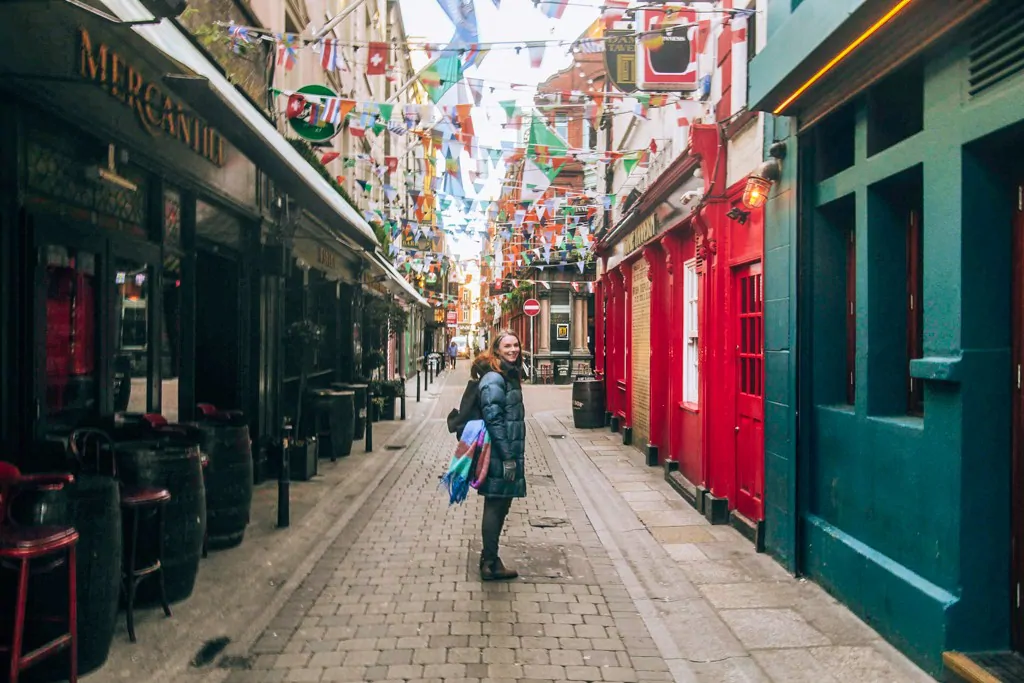
I recommend enjoying the city for a day. In that time, you can see the famous Temple Bar, have your first pint at the Guinness Storehouse, or visit the Book of Kells. The next day, head out to see the rest of the country. Small towns are where you’ll get to really see Irish culture and maybe even hear the Irish language.
If you’re short on time for your trip to Ireland, you can base yourself in Dublin and take day trips to Howth, Bray, or Wicklow to see more of the countryside.
Writing Off Irish Food
Lots of people tell me they don’t like Irish food: “it’s just a lot of meat and potatoes.” And they’re not wrong. Potatoes are a huge aspect of Irish cuisine.
However, an Irish Sunday roast is probably the best meal I’ve ever had, and a traditional Irish breakfast will keep you full for a day of exploring Ireland.
There is also quite an International food scene, and I had a delicious Japanese meal in Sligo and amazing Pakistani food in Greystones. Galway has amazing farm-to-table style restaurants where the menu changes with the seasons!
Make it a point to try traditional Irish dishes while you’re there, and don’t be nervous about trying something new as well!
Assuming You Need a Rental Car
I traveled to Ireland 9 times before I rented a car. You can absolutely see amazing places using Ireland’s public transportation system or guided tours.
I never felt slighted or like my experience in Ireland was lacking because I didn’t have a car. I’ve been able to see all of the hot spots as well as a few off-the-beaten-path hidden gems without a car!
If driving in Ireland scares you, don’t worry. Follow my 7-day Ireland itinerary without a car, and you’ll have an amazing trip!
Relying on Uber
Uber exists in Ireland, but not in the same way as in the United States. Uber drivers are not allowed to operate private cars, which means that when you “call an Uber,” a taxi will show up as your ride.
The Uber app works, but most locals use an app called Free Now (formerly My Taxi). This app connects you with a taxi, and you pay through the app.
However, please note that this is not available everywhere in Ireland. When I was in Sligo, I wanted to do a hike that a bus couldn’t get me to. There were no cars available on FreeNow because that app doesn’t work there.
I had to do it the old-school way and ask the front desk to call me a cab, then I got the taxi driver’s number so I could call him when I was ready to get picked up after the hike! Actually, it was kind of fun that way!
You don’t need to perfectly understand Irish culture before you arrive. You just need to do a little bit of pre-trip research to avoid treating Ireland like a stereotype! If you go into your trip with an open mind and are willing to learn, you’ll come away with a much better understanding of Irish culture, all while avoiding cringe-y tourist mistakes!
Now that you know what not to do in Ireland, it’s time to plan the trip! Start with my 7-day Ireland itinerary for all of the things you should not miss in Ireland!
Read More About Ireland Travel Planning
- How to Plan a Trip to Ireland: A Step-by-Step Guide
- Is Ireland Safe to Travel Alone as a Solo Female Traveler
- The Only Ireland Packing List You Need for Any Season
- What Not To Do In Ireland: Avoid These Tourist Mistakes in Ireland
- 20 of the Best Places to Visit in Ireland
- How to Spend 7 Days in Ireland without a Rental Car
- How to Spend Four Days in Ireland: The Ultimate Itinerary
- How to Get Around Ireland as a Solo Traveler
- How Much Does a Trip to Ireland Cost? A Realistic Budget
Like this post? Pin for later!