Ireland Travel Tips for First-Time Visitors
Last updated on September 12th, 2026 at 09:09 pm
Planning your first trip to Ireland? There are a few things I wish I’d known before my first visit eleven years ago.
Over the years, I’ve traveled to Ireland by public transportation and rental car, visited in different seasons, and explored everything from Dublin to small towns along the west coast.
I’ve learned that some of the most useful Ireland travel tips aren’t about finding more places to visit; they’re about knowing how to plan your trip in a way that actually works for you.
You don’t need to rent a car, you don’t need to spend your entire trip in Dublin, and you don’t need perfect weather to have an amazing time in Ireland.
I’ve also learned a few things the hard way, like blindly following my GPS toward a ferry that didn’t exist and discovering that an umbrella is basically useless when Irish rain comes with wind.
In this guide, I’ll share the things I’ve learned from traveling to Ireland eleven times, including when to visit, where to fly, how to get around, how much to budget, what to pack, and a few cultural tips to know before you go.
This post contains affiliate links, which means that, at no additional cost to you, I will earn a tiny bit of income if you decide to make a purchase or booking. Please read my disclaimer for more information.
Consider Alternate Airports to Dublin
Dublin is the primary international airport serving Ireland, but other options may be better, especially if you’re not visiting Dublin.
I prefer Shannon when my itinerary is west coast focused, even though it requires me to connect in New York.
I am using Shannon for my upcoming trip in September because I am planning to drive the Ring of Kerry and Dingle Peninsula before spending a weekend in Galway. Since I’m not going to Dublin, I can land and start my trip immediately!
If you’re visiting from the east coast of the US, consider flying into Shannon.
If you’re visiting from mainland Europe, you also have smaller airport options such as Cork, Kerry, and Donegal.
There is No Perfect Season to Visit Ireland
I think Ireland is great any time of the year!
My preferred months to travel in Ireland are May, September, and October. At these times of the year, you still have good weather, hotel prices are reasonable, and there are fewer crowds.
I try to avoid peak tourist season, which is from June to August. During the summer months, popular tourist attractions are crowded, and hotel prices increase. But you do have the best chance for sunny days and will get the most daylight hours, with the sun setting well past 10:00 pm.
You can still have a great time during peak season if you prioritize less traveled areas of the country or visit the top sites at off-peak hours.
Limit Your Time in Dublin
If it’s your first trip to Ireland, I don’t recommend skipping Dublin as others do. It’s a fun city with a lot of history and a good base for day trips to smaller coastal towns. Two of my favorites are Bray and Greystones.
Instead of skipping Dublin altogether, I recommend spending 2 nights in Dublin, then moving on.
Here’s how to make that work for your itinerary:
- Day 1: You’ll land early enough for a full day of sightseeing upon arrival, even if you’re jet-lagged!
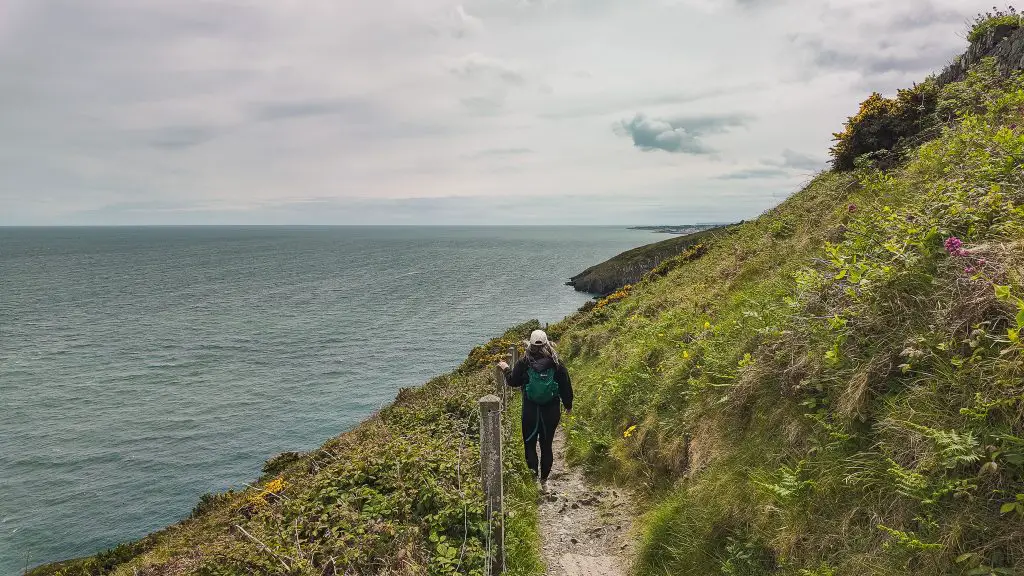
- Day 2: Take a day trip to Bray and walk the cliff walk to Greystones. Spend the evening in Dublin’s pubs.
- Day 3: Do any final activities in the morning, then take an afternoon train or bus onward.
When I took my Mom in May, this is the exact way we spent two nights in Dublin. It fit perfectly into our 6-day trip!

A Rental Car Isn’t Strictly Necessary
I visited Ireland 8 times before I rented a car! Using public transportation, I was able to visit places like Sligo, Kinsale, Doolin, Dingle, and more! Obviously, not all on the same trip.
Even since renting a car, I don’t feel like my public transport trips were lacking, and I will still choose not to rent a car if I can get to places easily using public transit.
My Mom and I used public transportation with bases in Dublin, Galway, and Doolin. She loved being able to sit back and relax on the buses and trains, enjoying the view without the passenger princess stress!
If Booking a Rental Car, Read the Terms and Conditions
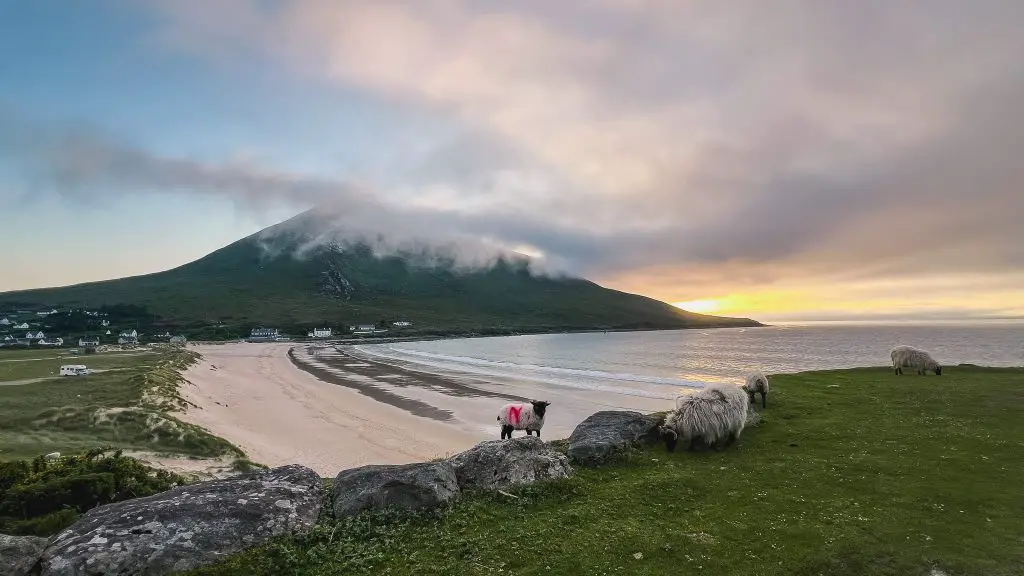
I have used NewWay for each of my three Irish road trips because their booking process is super straightforward and transparent.
The price they quote online is the price you pay; they have amazing customer service and 24-hour roadside assistance, which is essential for me when I do my road trips solo.
Before booking a rental car, read the company’s terms and conditions to understand:
- Type of insurance provided and if third-party (credit card) insurance is accepted.
- If there is an additional fee for driving into Northern Ireland (if that’s part of your itinerary)
- Age restrictions
- License requirements
Review GPS Directions before Starting Your Drive
I use Google Maps for driving directions, and most of the time it works really well.
However, I learned the hard way to review the directions before setting out.
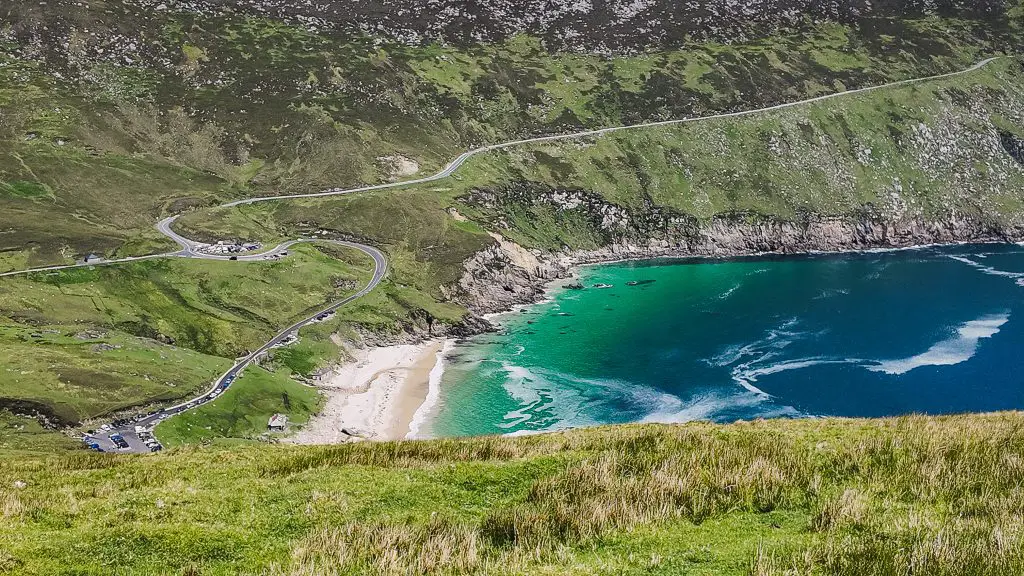
On my Donegal road trip, I was trying to get from the Fanad Peninsula to Malin Head. I was blindly following my GPS when I realized I was pulling into a pier and the GPS voice was telling me to board a ferry!
There wasn’t even a ferry boat there!
It took me a few stressful minutes with very limited cell service to re-route myself using only roads to get to my destination. It added a couple of hours to my already long day of driving!
Don’t do what I did; review the directions before leaving.
If you’re not driving, Google Maps works really well for figuring out how to get places with public transportation or for walking around cities.
Make an Effort to Get Off the Typical Tourist Path
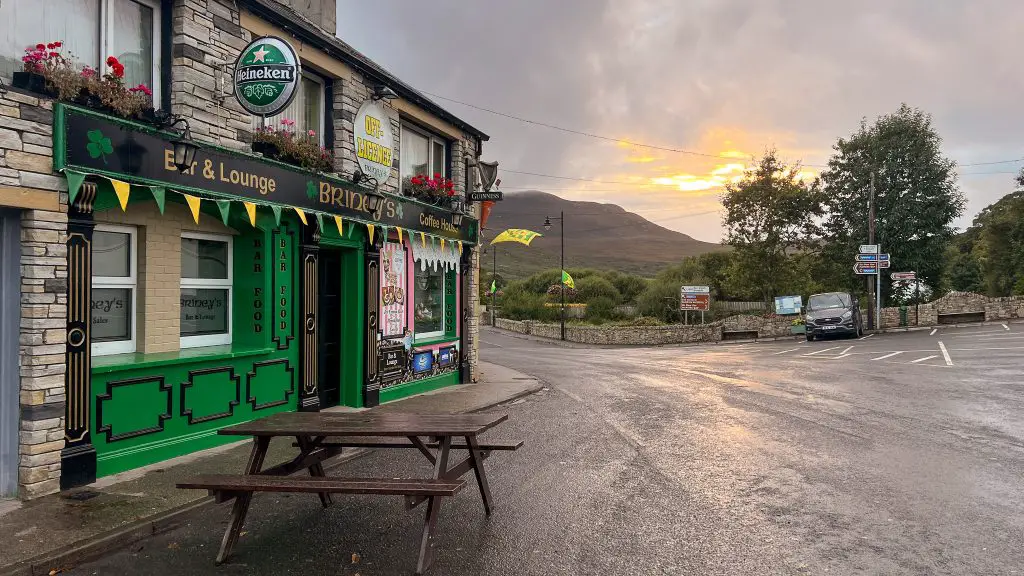
On my first trip to Ireland eleven years ago, I followed the typical Ireland itinerary, which included using Dublin, Galway, and Cork as bases. I randomly added two nights in Ennis to mix it up a bit.
My favorite places from that trip were Bray, Ennis, and Galway. Since then, I ensure that my itineraries prioritize smaller towns, with re-visits to Galway
In smaller towns, I find it’s easier to connect with local people. My theory is that they don’t have tourist fatigue, but I could be wrong!
I also find it’s easier to slow down, since I’m not competing with other tourists for time and space at viewpoints or restaurants.

Go to the Cliffs of Moher during Off-Peak Hours
I’ve had the opportunity to visit the Cliffs of Moher three times. My first visit was with a guided tour; then I spent a few days in Doolin waiting for good weather to do the cliff walk; and recently I used public transport with my Mom.
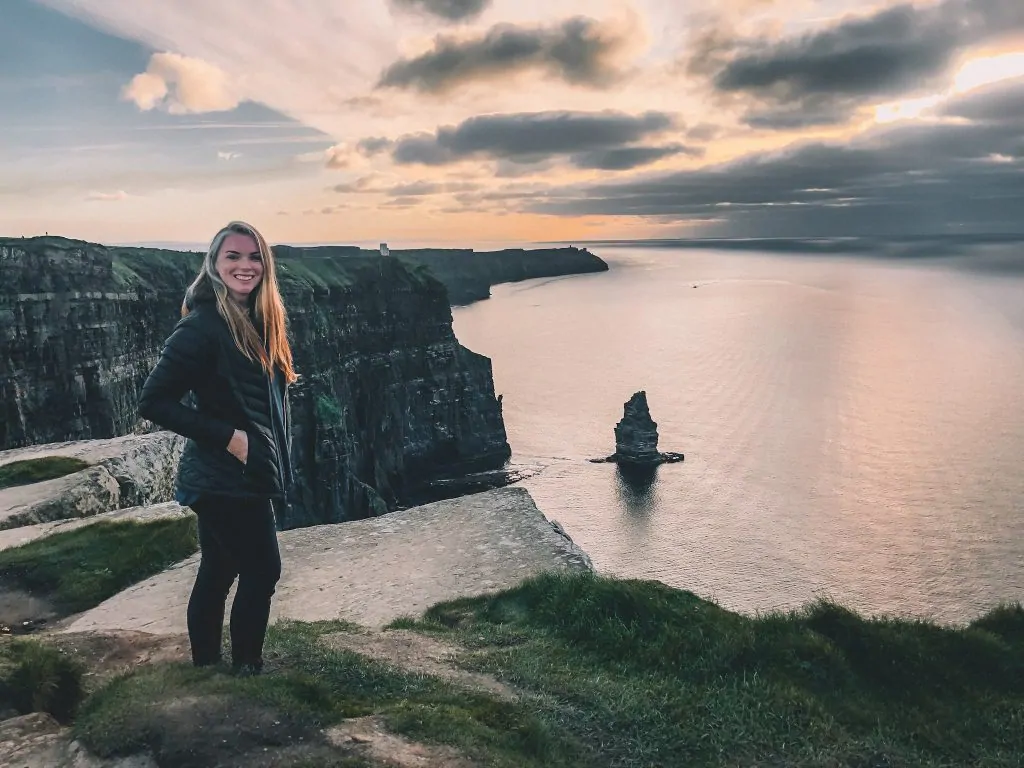
My favorite time was doing the cliff walk from Doolin to the Cliffs of Moher. I waited a few days for good weather, and even on the day I went, I wasn’t sure it would be clear by the time I got there. But I headed out about 3 hours before sunset and witnessed one of the best sunsets I’ve ever seen over the cliffs!
It was a good reminder that you can see popular tourist destinations without the crowds if you’re patient, creative, and willing to sweat a bit (at least in this case).
Tour buses are usually at the cliffs between 10:00 am and 3:00 pm, so it’s best to visit them before or after.
If it’s a clear day, go for sunset; it’s magical!
Don’t Pack an Umbrella; Choose a Good Rain Jacket Instead
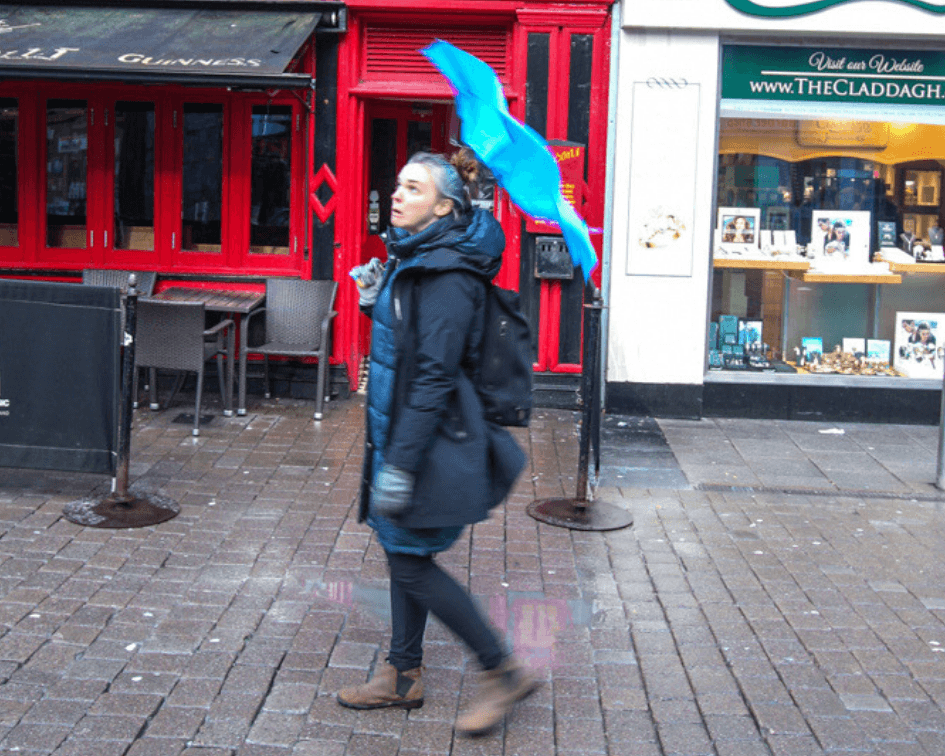
Even though it rains a lot in Ireland, umbrellas are often useless because the rain comes with wind. I had my umbrella turned inside out multiple times before I finally gave up using it!
Instead, wear a waterproof jacket that covers your bum to keep your upper legs dry as well.
Jeans take a long time to dry, so if it’s raining sideways or you’re planning a hike in the rain, wear waterproof pants over leggings or quick-drying pants.
In one day, you may experience downpours and sunny conditions. This is the perfect time to keep your eyes peeled for a rainbow.
Leave room in your day bag for layers, pack a good waterproof jacket, wear sturdy waterproof shoes with good tread, and you’ll be fine.
When I have a rental car, my waterproof pants and hiking boots are always readily available.
Understand the Difference between the Republic of Ireland and Northern Ireland
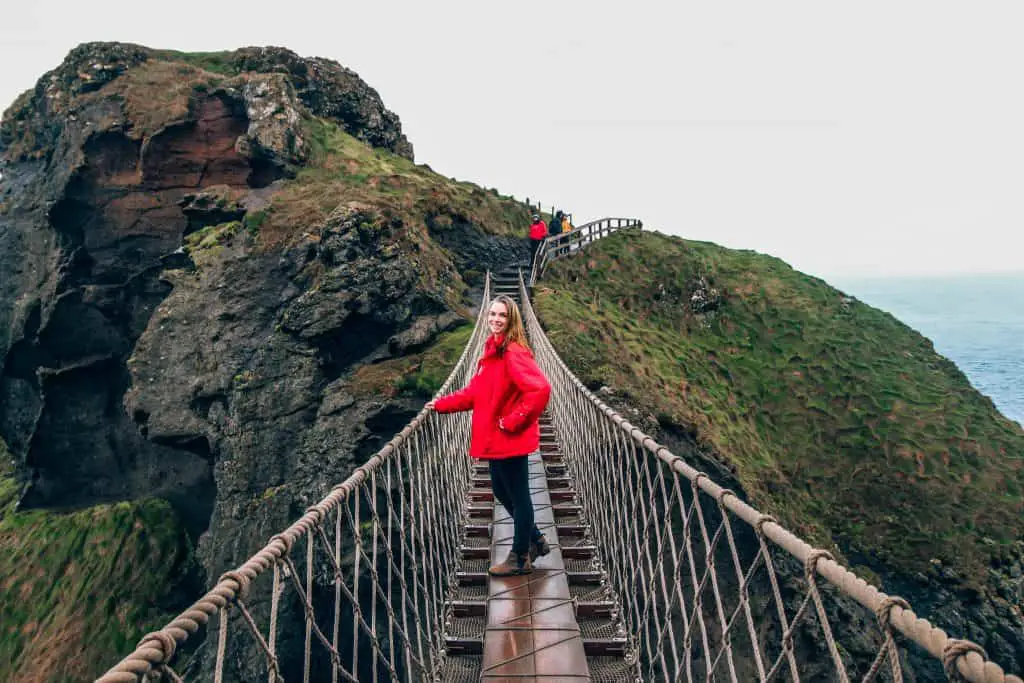
The Republic of Ireland, usually just called Ireland, is part of the European Union. Northern Ireland is part of the UK.
It’s important to know that they are two different countries, with their own currencies and different laws.
In recent history, Northern Ireland went through many years of fighting for independence, called the Troubles. If you’re visiting Northern Ireland, I highly recommend learning about this as it still impacts life there.
Say Nothing is a good book-turned-TV series about some key players during this time. Also, Derry Girls, for a lighter perspective, is a good watch before visiting.
Don’t Bring Up Politics in Casual Conversation
Since there is a tumultuous political history in Ireland, I don’t recommend bringing it up in casual conversation over pints.
I also tend to avoid current politics. I was in Ireland the week that they were voting to legalize same-sex marriage. Since I support this, it was a joyful time to be there and participate in the celebrations once it was legalized. But there were a lot of conversations I overheard in pubs that went both ways.
It was interesting to hear different perspectives, and some people asked for my opinion as an outsider, but I didn’t offer it up willy-nilly.
However, as an American visitor, Irish people have brought up the current US political climate with me. It helps that I’ve found most people who ask do so with the understanding that so much of what is happening is beyond me. Especially when my response is “I didn’t vote for this”.
But I do my best to steer the conversation in a different direction. If they’re insistent, then I just remove myself from the conversation.

Don’t Assume Ireland is Too Expensive to Visit
Not gonna lie, Ireland is an expensive country to visit, and that’s coming from someone who lives in San Francisco – a very expensive place!
That being said, you can visit Ireland on a budget – I’ve done it plenty of times by choosing to stay in hostels, use public transport instead of renting a car, and visiting grocery stores for inexpensive lunches.
When you’re sitting down to plan your Ireland travel budget, know where you’re willing to splurge and where you’re willing to save.
You may want to experience a few nights in a luxurious Irish castle, but the rest of the time you stay in more budget-friendly accommodation.
Or, since you may not rent a car, you’ll stay in nice places in the heart of towns so it’s easier to use public transportation.
For a week in Ireland, I budget about $2,000-$3,000, not including flights. This allows me to stay in comfortable accommodations and splurge on good meals and drinks. The higher end of this range is for when I decide to rent a car.
Carry a Small Amount of Cash
Most places throughout Ireland, even small coffee carts, will take a credit card or tap-to-pay payment.
If you’re taking a bus and buying tickets from the driver, you need exact change for the ticket. So break a 20 bill and keep it on you in case you need it to hop on a bus.
I typically take out 80 euros at the start of the trip and have most of it left by the end!
Irish Hospitality is Amazing, but Don’t Take Offense
Yes, Irish people are incredibly friendly. It’s one of the reasons walking into a pub alone doesn’t intimidate me. I know I’ll eventually talk to someone and maybe make a new friend!
So many times I’ve been welcomed into groups when people realize I’m drinking alone, and it’s so lovely. If not, the bartender is usually up for a bit of banter at the very least!
But they are also regular people like you and me, with good and bad days.
If someone isn’t overly chatty with you, don’t take offense.
Irish Slang and Humor Are Amazing, but Can Be Confusing
The first time someone said, “what’s the craic?” I must’ve looked at them like they were speaking Greek cause they said, “oh! You’re not from here!” “How’s it going?!”
I’m not confident enough to use it myself, but I do love using knackered for tired. That comes naturally.
Just don’t assume an Irish accent or start saying phrases like “top o’ the morning to ya”. No one says that.
The Irish people are also amazing at teasing you, also known as “takin’ the piss”. They appreciate when you can tease back but keep it respectful!
Mind Where You’re Walking
The cobblestone streets of Dublin can be tricky. When I brought my Mom, I told her on day one to watch where she stepped, because I watched her step off the footpath into a bike lane while looking at a pretty building.
The next morning, when crossing the street, she tripped and fell. She was a trooper the rest of the week and refused to go to a doctor. Turns out she’d broken her arm at the elbow. Yikes!
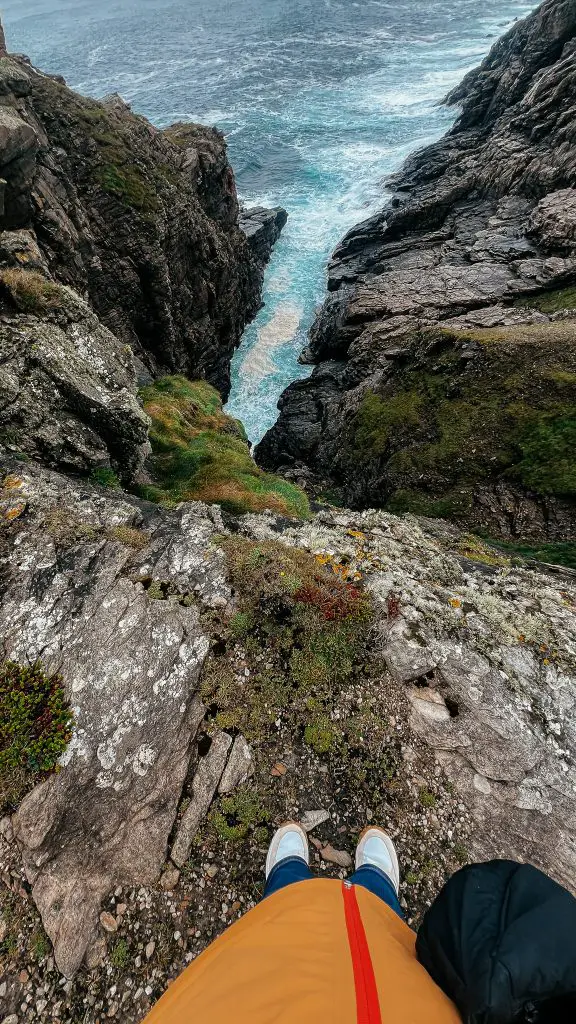
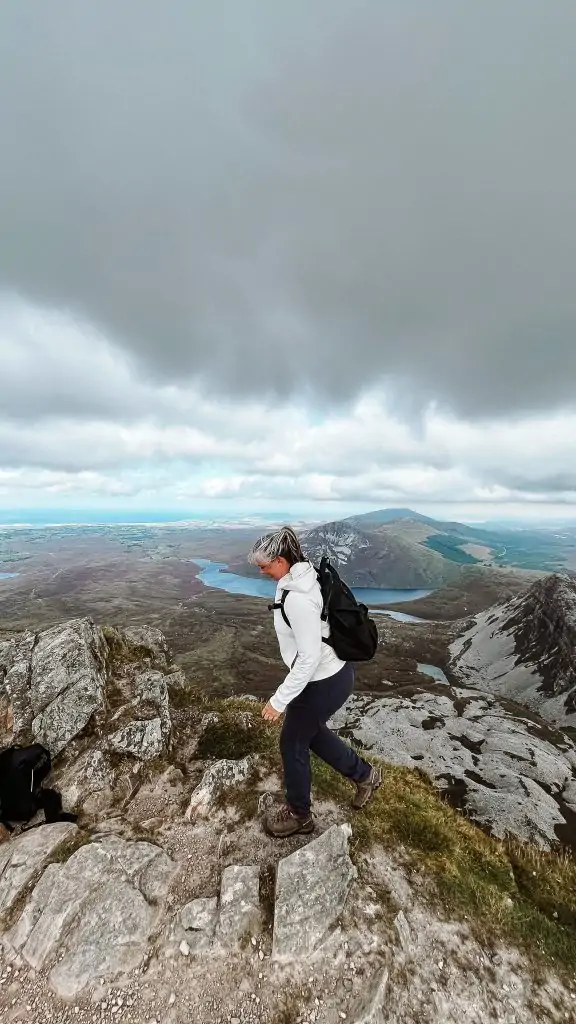
Please be careful when you’re walking – not only in cities but also when you’re out on the coast or on a hike!
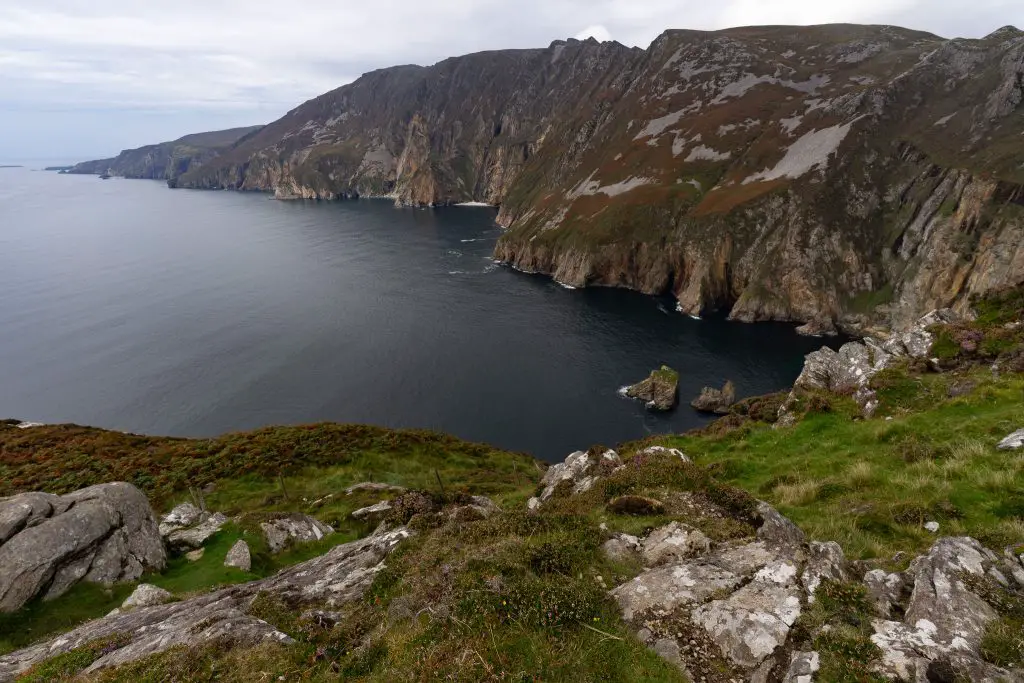
Windy conditions are dangerous, especially at cliffs and mountain peaks. The Cliffs of Moher now have guardrails in place, but others like Slieve League do not.
Please follow local recommendations and stay back from the cliff’s edge, and don’t hike mountains with low visibility!
Remember to Look Right Before Crossing the Street
I still get tripped up when crossing the roads in Ireland. I always want to look left first, then remember I’m supposed to look right, so I am just standing there at the curb looking left and right multiple times before I even attempt to cross.
I love that in Dublin, on the ground at pedestrian crossings, they’ve written look right or look left. It’s a great reminder of which way I should be anticipating traffic!
Are you ready to turn these Ireland travel tips into an actual trip? I’ve put together my perfect one-week Ireland itinerary, without a car, so you don’t have to stress about driving.
I followed this itinerary pretty closely when I took my Mom to Ireland for her first trip, and it combines some of my favorite places and experiences in Ireland into one week. If you’re not sure how to turn all of these tips into an actual itinerary, start here!
Read More About Ireland Travel Planning
- How to Plan a Trip to Ireland: A Step-by-Step Guide
- Is Ireland Safe to Travel Alone as a Solo Female Traveler
- The Only Ireland Packing List You Need for Any Season
- What Not To Do In Ireland: Avoid These Tourist Mistakes in Ireland
- 20 of the Best Places to Visit in Ireland
- How to Spend 7 Days in Ireland without a Rental Car
- How to Spend Four Days in Ireland: The Ultimate Itinerary
- How to Get Around Ireland as a Solo Traveler
- How Much Does a Trip to Ireland Cost? A Realistic Budget